
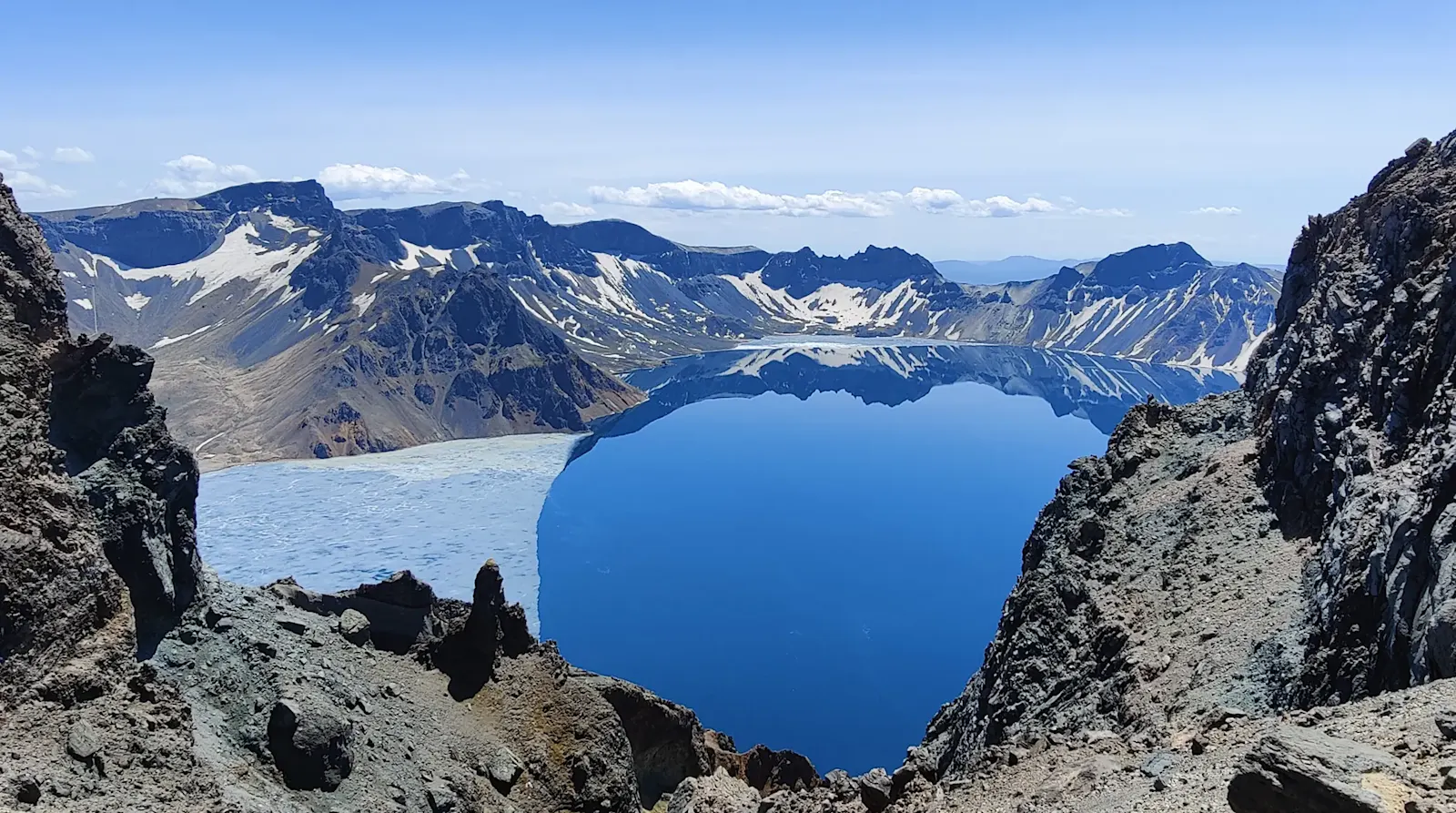
Changbai Mountain (Mt. Paektu)
A sacred volcanic peak crowned by Heaven Lake. Legendary home of the Manchus and birthplace of the Korean nation.
Guide Content
A Sacred Mountain Shared by China and Korea
Rising to 2,750 meters along the border of China and Korea, Changbai Mountain, or Changbaishan (長白山) as it is called in Chinese, is one of Northeast Asia's most storied landscapes.
Today, the mountain is physically shared between China and Korea, with roughly half in each country. Similarly, the cultural significance of the mountain, known as Mt. Paektu (백두산/白頭山/Paektusan) in Korean, stretches across the border as well.
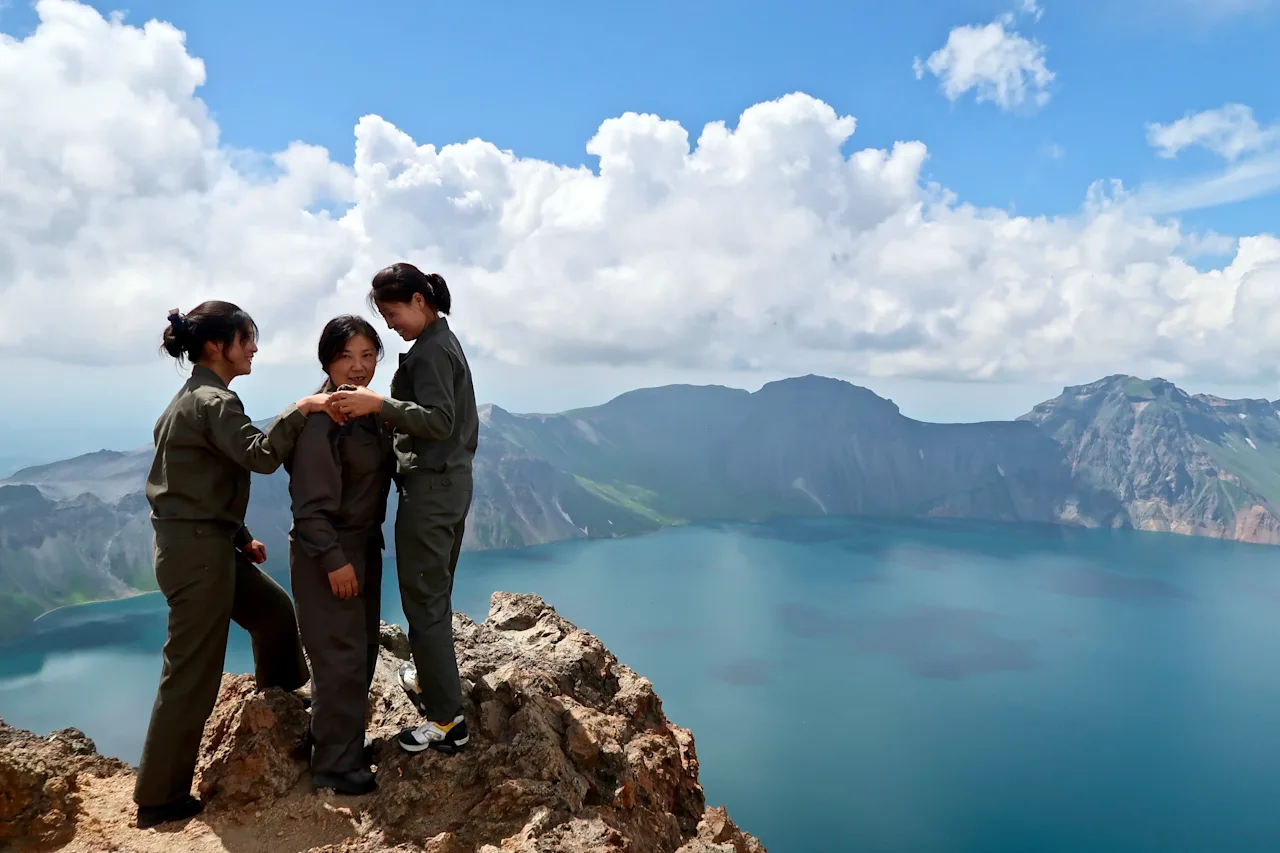
For Koreans, Mt. Paektu is regarded as the mythic birthplace of the Korean people. Koreans in both the north and south revere it as the birthplace of their nation, where legend says King Tangun founded Gojoseon (고조선/古朝鮮), the first Korean kingdom.
For China's Manchu people, Changbai Mountain holds an equally deep significance as a sacred ancestral landscape tied to early Jurchen roots and the formation of later Manchu identity, so much so that during the Qing dynasty, the Aisin Gioro imperial clan designated the Changbai region as a restricted imperial zone. For over two centuries, access was tightly controlled under a protection policy intended to preserve what was seen as the geomantic source of imperial legitimacy.
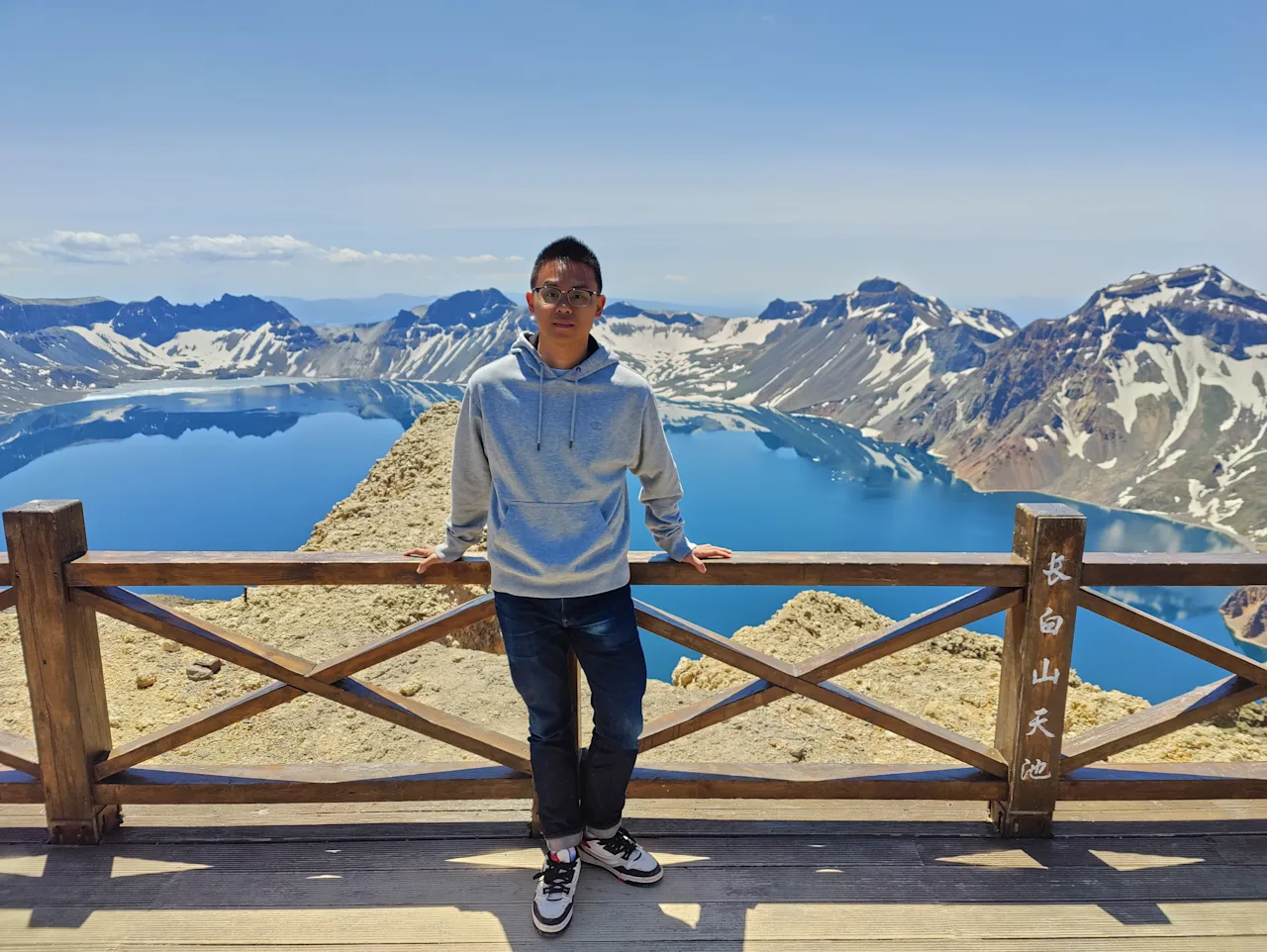
At the heart of the mountain lies Heaven Lake (天池 - Tianchi), one of the highest volcanic crater lakes in the world. Its surface shifts between deep blue, steel grey, and mist-white depending on weather conditions, often revealing itself only briefly before cloud and fog roll back in.
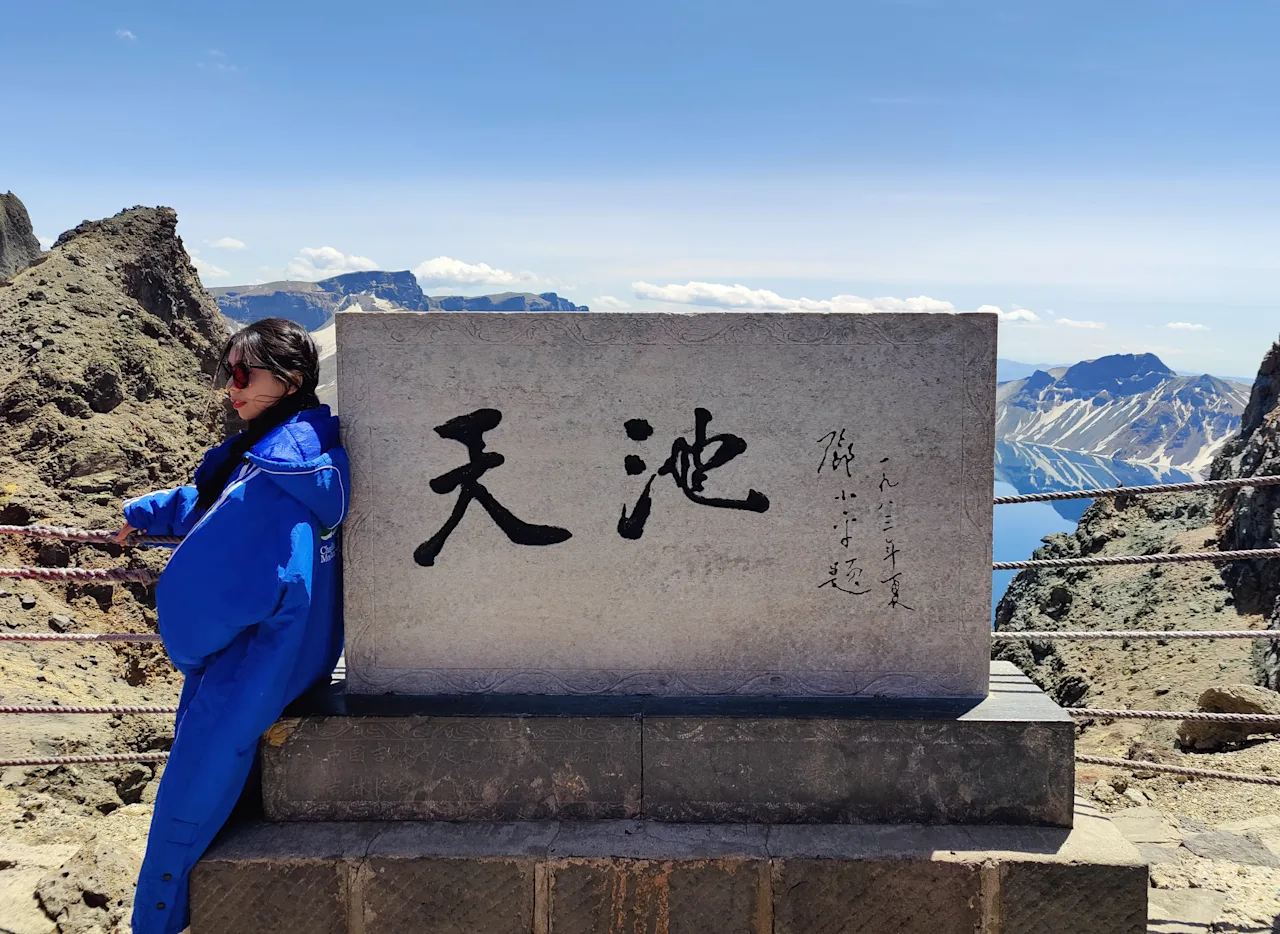
In front of Heaven Lake on Mt. Paektu's Chinese side: a stone marker inscribed with the lake's name in Deng Xiaoping's calligraphy.
Visitors typically ascend via shuttle and boardwalk routes to viewing platforms along the rim. On clear days, the view stretches across the full circular basin of the caldera, with the lake sitting like a hidden world carved into the mountains.
Getting to Changbai Mountain
When traveling through Northeast China, the region is well connected by high-speed rail (HSR), making it relatively straightforward to reach key hubs such as Yanji and nearby access points from cities like Shenyang or Changchun. However, despite this connectivity, Northeast China still sees relatively few Western travelers. As such, English signage and services can be limited, and for those who do not read or speak Chinese, navigating transfers, local transport, and mountain logistics can become challenging.
That's why Changbai Mountain is included in our Sino-Korean Frontier tours, where we handle the full ground logistics—from rail connections and local transfers to scenic area access—so the journey remains seamless. More importantly, it is not treated as an isolated stop, but integrated into a broader narrative of Northeast Asia’s shared borderland history, linking the mountain to surrounding Korean, Manchu, and frontier cultural landscapes across the region.
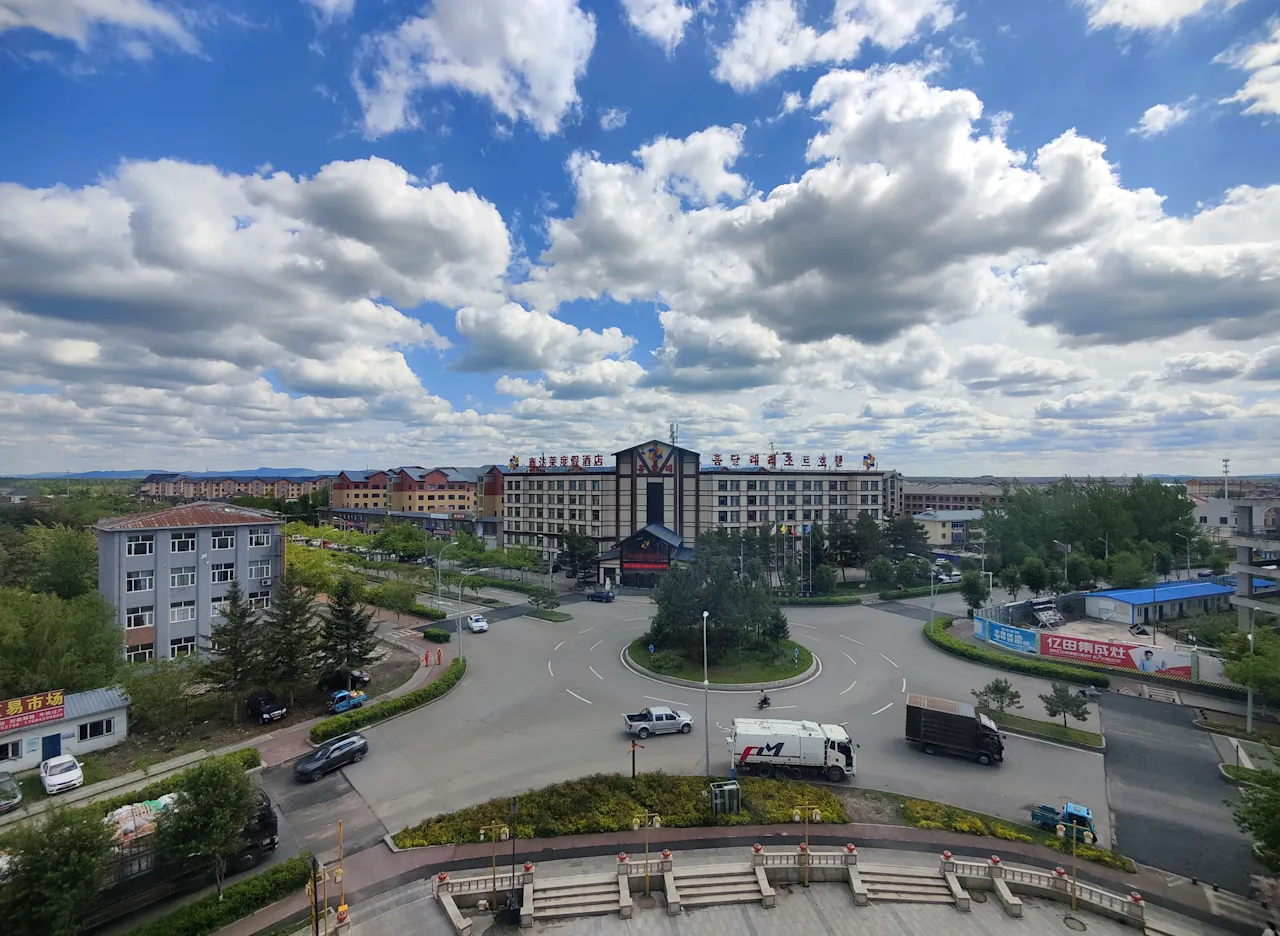
Erdao Baihe - the small town at the base of China's side of Changbaishan, or Mt. Paektu.
The most common gateway is Erdao Baihe Town (二道白河鎮), a small alpine settlement located near the foot of the mountain. It serves as the main base for most visitors, offering hotels, local restaurants, and access to hot spring resorts. From Erdao Baihe, travelers take a short transfer into the Changbai Mountain North Scenic Area, where shuttle buses handle the final ascent into the protected zone. The infrastructure is well-developed but tightly regulated, and weather conditions play a major role in whether Heaven Lake is visible on any given day.
Visiting from the Korean Side
When tourism to the DPRK is operating, visits to Mt. Paektu from the Korean side are organized through our sister company Taedong Tours, which specializes in travel to the DPRK (North Korea). These itineraries typically include an overnight stay at the Samjiyon, combining the journey with access to Korean hot springs and ski slopes.
However, DPRK tourism is currently suspended, and visits from the Korean side are not operating at this time. When open, access is tightly controlled and arranged exclusively through authorized channels, with travel typically concentrated in the late summer and early autumn months when weather conditions allow for flight and road access into the region.
Because of this level of control and limited access, the Korean side also offers a very different experience from the Chinese side that is far quieter with minimal crowds. For many visitors, this makes it one of the most atmospheric ways to experience the mountain, with a sense of scale and isolation that is harder to find on the Chinese side of the mountain.