North Korea Frontiers: Where China and Korea Meet (Autumn)
Explore the shared history and culture of China and Korea in a very Korean part of China right next to North Korea.
Tour Overview
A 9-Day Exploration of One of the World’s Most Fascinating Borderlands
This trip will be co-hosted by Carl Zha.
Many visitors come to this part of China just to see the DPRK (North Korea) up close. What they discover instead is a culturally rich frontier where Chinese and Korean histories have been intertwined for centuries, shaped by migration, shared struggles, and cultural exchange across one of the world’s most talked-about yet least understood border regions.
Welcome to China’s Northeast, or Dongbei (東北) as it is known in Chinese. This 9-day cultural expedition begins in Yanji (延吉), the capital of the Yanbian Korean Autonomous Prefecture (延邊朝鮮族自治州) in Jilin Province (吉林).
Yanbian (延邊) is home to China’s Chaoxianzu (朝鮮族—조선족 Joseonjok in Korean), one of the country’s officially recognized ethnic minorities. Their roots in this region stretch back generations, forming a distinct Korean heritage shaped through long-term settlement in Northeast China. Neither North nor South Korean, the Chaoxianzu represent a unique cultural identity that has developed on the Chinese side of the Sino-Korean frontier.
This living culture is visible throughout Yanji, from local markets to everyday cuisine and the sound of the Korean language in daily life. From here, we travel along the Tumen River, where China and North Korea meet at close range, offering direct views into the edge of the Korean Peninsula. As we move through the region, we also learn how Yanbian once served as an important base area for Korean independence fighters during the period of Japanese occupation, alongside the broader history of conflict and the impact of Japanese expansion across Northeast Asia.
From Yanbian, the route continues to Changbai Mountain (長白山), known in Korea as Mt. Paektu (백두산/白頭山), a volcanic peak that holds deep cultural and historical significance on both sides of the border. Straddling the Sino-Korean frontier, its landscape has long been shared in memory and meaning between Chinese and Korean historical traditions.
After descending from Changbai, the expedition continues westward to Shenyang (瀋陽), one of Northeast China’s most historically significant cities, yet still relatively unknown outside the country. It was here that the Qing Dynasty, China’s last imperial dynasty, first rose to power, laying the foundations for a state that would later expand across much of East Asia. In the twentieth century, Shenyang became a key center in China’s modern transformation, playing an important role in the 14-year War of Resistance against Japanese Aggression, which formed part of the wider Second World War. Today, the city reflects this layered history, where imperial origins, industrial development, and revolutionary struggle all overlap within the urban landscape.
Shenyang is also home to Xita (西塔), the largest Koreatown in Northeast China and one of the most distinctive Korean cultural districts in the world. Unlike other Koreatowns, Xita is shared by Chaoxianzu, South Koreans, and North Koreans, creating a rare convergence of Korean cultural worlds. Here, the journey includes a dinner at a DPRK-owned and operated restaurant, where traditional performances accompany the meal, creating an experience closer to a live cultural immersion than a typical dining setting.
From Shenyang, the route continues to Dandong (丹東) on the Yalu River (鴨綠江), China’s primary border city facing the DPRK's Sinuiju directly across the water. Here, the frontier becomes fully visible at street level, where riverbanks, bridges, and remnants of war sit within sight of a foreign state just meters away. It is a landscape where geopolitics is not abstract, but physically present, marking the final stage of the journey through the Sino-Korean borderlands.
When the tour concludes in Dandong, travelers may choose to continue onward to the nearby port city of Dalian, return to Beijing by train or flight, or take a ferry to Incheon in South Korea for a more adventurous onward journey. We are happy to assist with all post-tour arrangements.
The standard tour price is based on twin-share accommodation in standard double or twin rooms. Solo travelers will be paired with another traveler of the same sex. Friends traveling together may request to be roomed together at the time of booking. Couples should indicate during booking if they require a shared double bed configuration (one double bed instead of twin beds), which will be arranged accordingly.
For travelers who prefer not to share a room, single occupancy is available via a single supplement.
Pre-tour accommodation in Yanji before the official start date of the tour. This is recommended for those flying in from international destinations or seeking additional rest and acclimatization before the journey begins, with stays arranged at the same hotel used for the start of the tour to ensure a seamless and convenient arrival experience. Similarly, post-tour accommodation in Dandong can also be arranged for those who wish to spend more time in the city after the tour concludes.
Tour Highlights
Yanbian: China's Korean Cultural Heartland
Explore Yanbian, the cultural center of China's Chaoxianzu (Joseonjok) community. The Chaoxianzu are China's very own Koreans whose roots in Northeast China stretch back generations. They are one of China’s 55 officially recognized ethnic minorities, with a distinct identity formed through long-term settlement and community-building within China’s northeastern borderlands. Neither North Korean nor South Korean, they represent a unique Korean heritage that has developed on the Chinese side of the Sino-Korean frontier. Over generations, they have preserved Korean language, cuisine, and cultural traditions while also shaping a cultural identity deeply rooted in life along the border.
Sino-Korean Friendship: Borders, Rivers, and Shared Struggles
Follow the frontier spaces where Chinese and Korean histories intersect, from the Tumen River in Yanbian to the Yalu River in Dandong. Along the way, visit Changbai Mountain (known as Mt. Paektu in Korea), a landscape deeply significant in both China and Korea, sitting fittingly right on the border with one half in each country. This region also reflects periods of shared struggle, where Chinese and Korean forces fought alongside each other on multiple occasions, including the War of Resistance against Japanese Aggression and the Korean War. This international fraternal bond is still visible today in more subtle forms, allowing for the chance to not only see the DPRK from across the river, but also to encounter elements of its culture through real people living and working in the borderlands.
Shenyang: Where History Was Made
Discover Shenyang, city that's little-known outside China but nonetheless played a defining role in shaping modern China. It was the birthplace of the Qing Dynasty, the last imperial dynasty of China, and later became one of the key starting points of China's 14-year War of Resistance against Japanese Aggression, which later became part of the broader Second World War. Today, the city's historical sites reflect this dual legacy of imperial power and modern conflict, marking it as one of the most important yet underrecognized cities in Northeast Asia's modern history.
Itinerary
Sunday, October 11 – Arrival in Yanji
- Arrive at your convenience to Yanji.
- The G127 high-speed train from Beijing departs daily at 9:00 AM and arrives at Yanji West Station at 3:16 PM. If needed, we can assist with booking train tickets and arranging transfer from your hotel to Beijing Chaoyang railway station.
- There are also daily flights to Yanji from Beijing, Shanghai, and Incheon.
- If your arrival in Yanji is after 4:00 PM, we recommend arriving one day earlier. We can also assist with pre-tour accommodation arrangements.
- Whether arriving by plane or train, your driver will be waiting for you at the airport or station exit with your name sign, and you will be transferred to our hotel.
Afternoon
- At 5:00 PM, we will hold a pre-tour briefing to review the itinerary and tour guidelines, and to answer any questions you may have.
- After the pre-tour meeting, we will head out to explore the city on foot, getting an introduction to the local area as we make our way toward dinner: authentic Korean barbecue.
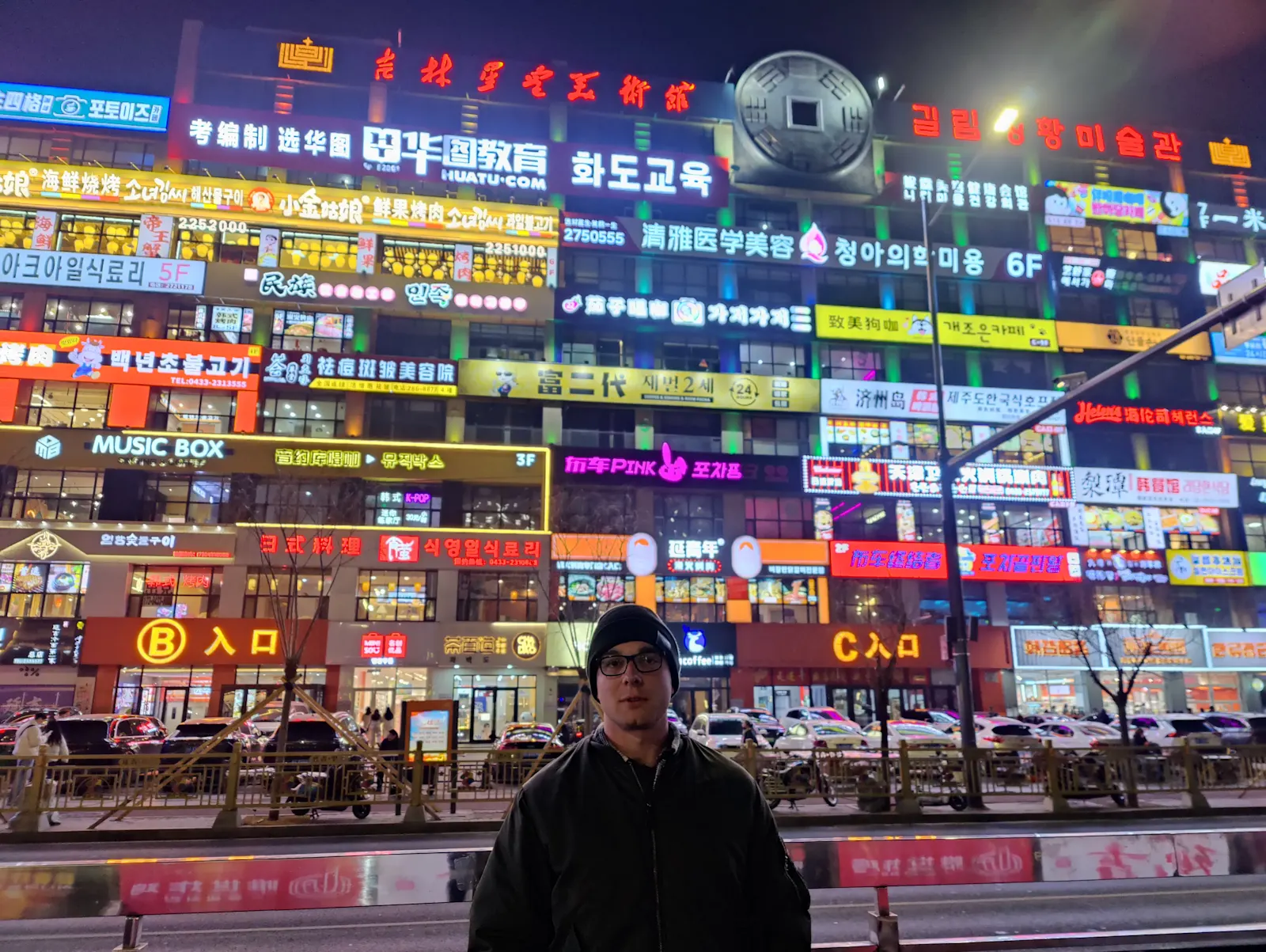
- We will then stop at Yanji’s famous "Influencer Wall," or wanghongqiang (網紅牆) in Chinese, a popular photo spot that has become a must-visit for travelers.
- For those who still have energy afterward, you're welcome to continue exploring the city's nightlife at your own pace. This is a great opportunity to get to know your fellow travelers and settle into the group.
- Overnight in Yanji.
Monday, October 12 – Yanbian and the North Korean Borderlands
Morning
- Breakfast at the hotel.
- We begin today with a trip to the Yanbian Museum, where we will learn about the history and culture of the Chaoxianzu in greater depth.
- Following our museum visit, we'll be heading over to nearby city of Longjing. There, we visit the former Japanese Consulate, which has since been converted into a history museum commemorating the victims of the Gando Massacre.
- Following Japan's colonization of Korea, many anti-Japanese Koreans fled to what is now Yanbian (known as Gando at the time), turning the region into an important base of resistance. In response, Japan launched military operations in the area, both to suppress the Korean independence movement and to expand its imperial influence further into northeastern China.
- This shared history of resistance against Japanese imperialism continues to hold significance in both China and Korea today. It is remembered as a period of profound hardship, but also of solidarity and struggle, and remains an important historical reference point in understanding the foundations of modern Sino-Korean relations and the sense of historical connection between the two peoples.
- As the museum guide explains the history, live actors will appear at key moments to reenact scenes from the era, bringing the past to life and illustrating the hardships endured by the Chinese and Korean peoples, as well as the resilience that ultimately carried them through to victory.
- Next, we embark on Highway G331, tracing the Tumen River, which forms the natural border between China and Korea, as we make our way toward Hunchun.
- We will enjoy a simple Korean lunch on our way to Hunchun.
Afternoon
- After lunch, we continue heading towards Hunchun. Along the route, we will stop at selected viewpoints to observe everyday life on the other side of the river and better understand the unique borderland landscape of the region. We will also pause in Tumen for a coffee break right by the river, directly facing the North Korean town of Namyang.
- After our coffee break, we will head to a nearby observation deck, where we can observe daily life in the DPRK from across the river.
- We then arrive in Fangchuan, a border village in Hunchun where China, Korea, and Russia meet. From this unique vantage point, we can see Russia's Khasan and North Korea's Tumangang-dong. This is one of the few places in the world where the territories of all three countries can be viewed from a single location. Needless to say, we'll stop for photos.
- As the sun begins to set over the Tumen River, we make our way back to Yanji after a day of borderland exploration, historical discovery, and glimpses into life across the frontier.
- Rather than having another group dinner, tonight is a night of culinary exploration. Yanji has a very vibrant street food scene, and there are many local specialties that we believe every visitor should try, including kaolengmian (grilled cold noodles) and grilled myeongtae (pollock imported from North Korea). If you're indecisive, your guide can help.
- Overnight in Yanji.
Tuesday, October 13 – Yanji & Transfer to Changbai Mountain
Morning
- Breakfast at the hotel.
- No visit to Yanji is complete without a stop at Yanji West Market, a large multi-story shopping complex with hundreds of stalls selling everything from clothing to food. Some goods are sourced locally, while others come from Korea, reflecting the region’s cross-border influences. We recommend picking up some dried myeongtae for snacking on the road—it's much tastier than it sounds!
- Before departing Yanji, we visit the Yanbian Korean Folk Culture Park. Here, you'll have the option to rent traditional Korean dress and take photos throughout a reconstructed village designed in the style of historical Korean rural settlements, offering a glimpse into everyday life from past generations.
- We will have our final meal in Yanji before hitting the road and heading to Erdao Baihe, a small town near the foot of Changbai Mountain, or Mt. Paektu as it is known in Korea.
Afternoon
- Upon arrival to Erdao Baihe, we will check into our hotel.
- As a quaint mountain town, Erdao Baihe is the perfect place to slow down and relax. Thanks to the geothermal activity associated with Changbai Mountain, the area is renowned for its natural hot springs. We will unwind with a visit to a local hot spring and enjoy a well-deserved chance to recharge before the next day's adventures.
- Dinner will be served at a local restaurant.
- Overnight in Erdao Baihe.
Wednesday, October 14 – Korea's Sacred Mountain
Morning
- Breakfast at the hotel.
- We then head over to the visitor center for Changbai Mountain. This is your chance to rent a down coat if you forgot to pack winter clothes. Once we get to the top of the mountain, it gets quite chilly.
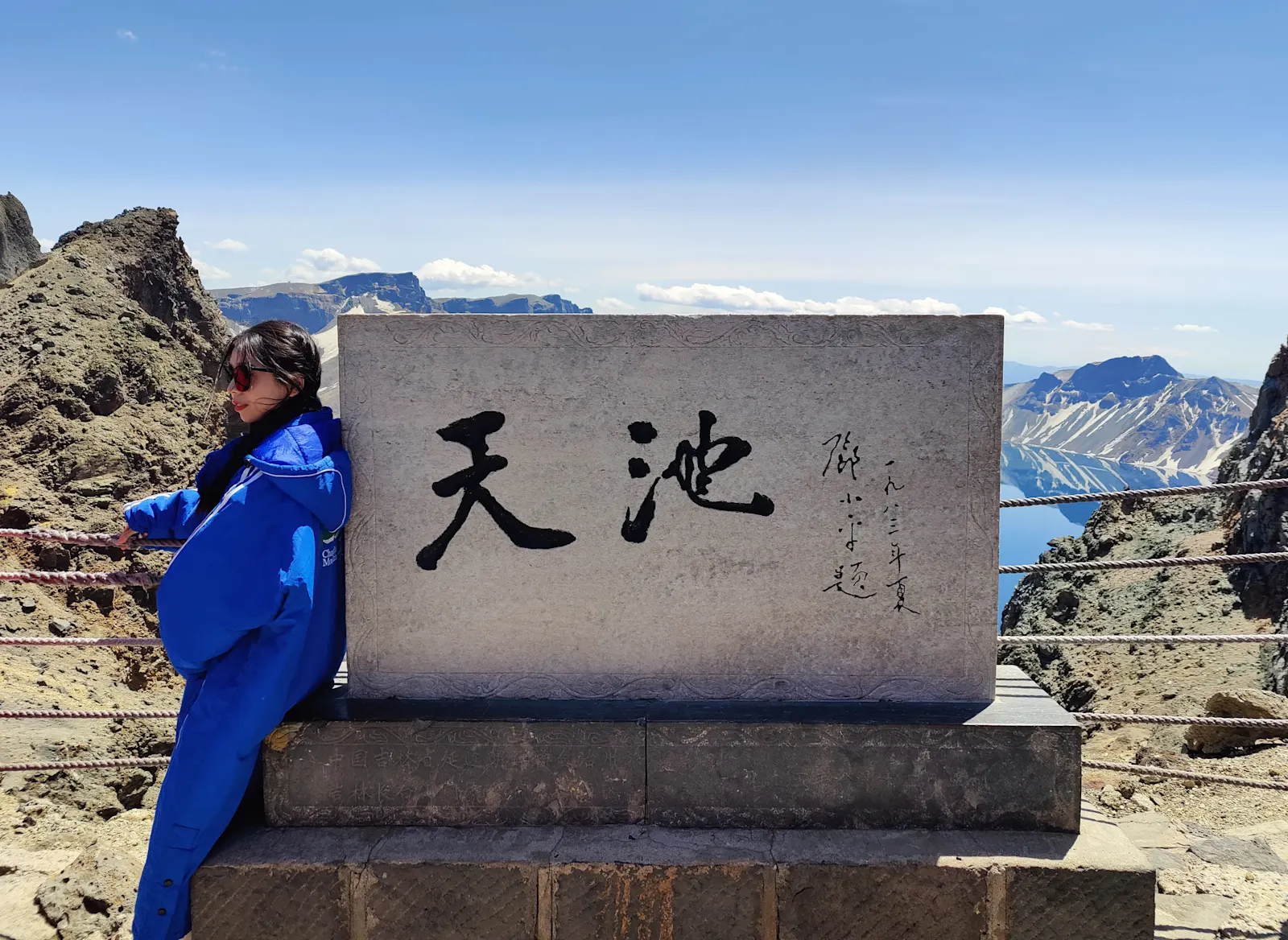
- Weather permitting, we begin with a visit to Tianchi, or Heaven Lake, a volcanic crater lake formed by an ancient eruption. The crown jewel of Changbai Mountain, Tianchi is the world's deepest alpine volcanic lake and one of Northeast Asia's most spectacular natural landmarks.
- Changbai Mountain, or Mt. Paektu, holds significance not only for the Korean people but also for China’s Manchu population. For Koreans, Changbai Mountain is regarded as the mythic birthplace of the Korean nation. For the Manchus, it is understood as a sacred ancestral homeland and a deeply symbolic landscape tied to early Jurchen origins and later Manchu identity. This significance was further reinforced during the Qing dynasty, when the Aisin Gioro imperial clan (rulers of the Qing Empire) designated the area as a restricted imperial zone. For over two centuries, access was tightly controlled under a protection policy intended to preserve what was seen as the geomantic source of imperial legitimacy.
- Lunch will be served at Changbai Mountain, allowing you to rest and enjoy a meal surrounded by the mountain's natural scenery before continuing the day's journey.
Afternoon
- After lunch, we continue deeper into Changbai Mountain to explore its most iconic natural sites. They include the dramatic waterfalls, the geothermal hot springs, Little Heaven Lake, and the crystal-clear waters of Green Abyss Pool.
- Once we conclude our visit to Changbai Mountain, we board the high-speed rail to Shenyang, the historic cradle of the Qing Dynasty and a city that has played a pivotal role in shaping modern Chinese history in multiple ways.
- Upon arrival to Shenyang, we check into our hotel.
- Today, we switch things up. Instead of Korean cuisine, dinner will be jiaozi (Chinese dumplings). While they are enjoyed throughout China, they are especially common in the north and northeast, where they are a staple of everyday meals and local food culture.
- After dinner, we head to Zhongjie (Middle Street), Shenyang's historic commercial hub and one of the city's most iconic pedestrian streets, where over 400 years of history sit alongside the energy of modern street life.
- Overnight in Shenyang.
Thursday, October 15 – Shenyang: Cradle of the Qing
Morning
- Breakfast at the hotel.
- We begin the day with a visit to Beiling Park, the largest imperial mausoleum in Shenyang and home to the Zhaoling Tomb, the resting place of Emperor Huang Taiji and his empress. Set within expansive parkland, it offers a glimpse into the early history of the Qing Dynasty before its rise to imperial rule over all of China. As you explore the park, you will learn about the origins of the Qing Dynasty.
- For lunch, we enjoy guobaorou (鍋包肉), a signature dish of Northeast China. Similar to sweet and sour pork but crispier and lighter, it is widely considered a local favorite that should not be missed.
Afternoon
- After lunch, we continue to the Mukden Palace (Shenyang Imperial Palace), the former royal palace of the early Qing rulers before they moved their capital to Beijing. As one of the best-preserved imperial palaces in China outside the Forbidden City, it provides a window into the origins of Qing political power.
- From there, we head to Xita (西塔), Shenyang's vibrant Koreatown and one of the most distinctive Korean districts in the world. Unlike typical overseas Korean enclaves, Xita is shaped by a unique mix of North Koreans, South Koreans, and China's Chaoxianzu.
- Tonight's dinner will perhaps be one of the most memorable in your life. We will visit a North Korea-owned and operated restaurant, where we not only enjoy a taste of North Korean cuisine, but also a live musical performance by the staff from the DPRK. For those who know a few DPRK bangers and are feeling bold, there may even be an opportunity to join in with the performance!
- Overnight in Shenyang.
Friday, October 16 – Shenyang: Birthplace of Resistance
Morning
- Breakfast at the hotel.
- We begin the day at the 9.18 History Museum, dedicated to the Mukden Incident of September 18, 1931. This historic incident marked the beginning of Japan's invasion of Northeast China and the broader escalation of the Second Sino-Japanese War. Through exhibitions and historical artifacts, the museum traces both the occupation period and the resistance that emerged in response.
- We then continue to the former courtroom of the Shenyang Trials, where Japanese war criminals were prosecuted after World War II. The site offers an important perspective on post-war justice and the legal reckoning that followed years of conflict and occupation.
- Lunch will be served at a local restaurant.
Afternoon
- After lunch, we visit Marshal Zhang Xueliang's (張學良) Old Residence, the former home of one of modern China's most complex historical figures. Best known for his role in the Xi'an Incident, Zhang's actions led to a dramatic turning point in Chinese history: he detained Chiang Kai-shek and compelled a temporary ceasefire in the civil conflict, paving the way for the United Front between the Kuomintang and Communists against Japan during the Second Sino-Japanese War. This shift transformed what had largely been guerrilla resistance into a broader, nationwide coordination of both conventional and guerrilla forces.
- The evening is free for independent exploration of Shenyang. As it is Friday night, the city's nightlife is especially lively. Dinner will be flexible, and your guide will provide recommendations depending on your preferences. Shenyang has no shortage of local specialties worth trying, from hearty Northeast dishes to late-night street food classics.
- Overnight in Shenyang.
Saturday, October 17 – Shenyang & Dandong: Sino-Korean Friendship
Morning
- Breakfast at the hotel.
- Our day begins with a visit to the Korean War Martyr's Cemetery, a memorial dedicated to the Chinese People's Volunteers who list their lives during the Korean War. Here, we begin exploring the war from China's perspective, learning about the origins of the conflict as well as the stories of some of the most widely commemorated figures in Chinese historical memory. The site offers insight into how the war is remembered in China and the role it continues to play in modern historical consciousness.
- Following our visit to the cemetery, we break for lunch at a local restaurant.
Afternoon
- After lunch, we transfer to Dandong via high-speed rail, traveling toward the western part of the Sino-Korean border.
- Upon arrival in Dandong, we check into our hotel and settle in.
- Dinner today will be Dandong-style barbeque and fresh local seafood, both specialties of this border city.
- After dinner, the rest of the evening is free for independent exploration. Dandong's riverside area offers nighttime views across the border, along with a relaxed local nightlife scene for those who wish to continue wandering.
- Overnight in Dandong.
Sunday, October 18 – Dandong: Life Along the Yalu River
Morning
- Breakfast at the hotel.
- We begin the day with a visit to the Korean War Museum in Dandong, where we explore the conflict from China’s perspective and learn about the historical events that shaped the border region we see today.
- From there, we continue to Hushan (虎山), the easternmost point of the Great Wall of China. On a clear day, you can see North Korea just across the river while standing atop the Great Wall!
- Lunch will be served at a nearby restaurant.
Afternoon
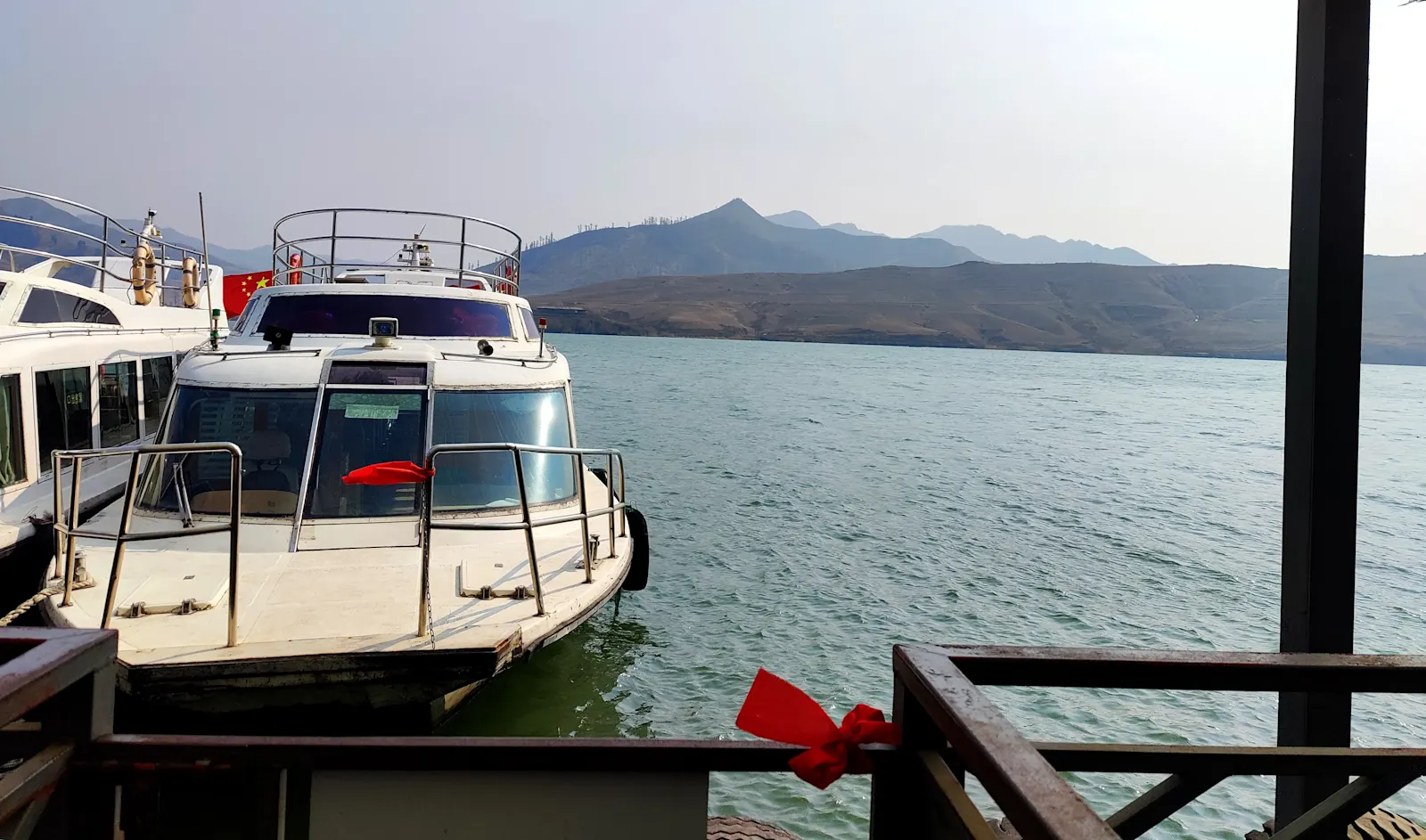
- After lunch, we continue along the Yalu River and see more of North Korea from China before taking a boat ride on the river itself. Vessels are permitted to approach the opposite shoreline as long as passengers do not disembark, bringing us as close as we can to the DPRK without entering the country!
- We return to Dandong's city center to visit the Sino-Korean Friendship Bridge and the Broken Bridge, which stand side by side across the Yalu River. During the Korean War, both bridges were repeatedly bombed and rebuilt due to their strategic importance. After the conflict, one bridge was fully restored and remains in use today, while the other was left in its damaged state as a war memorial, preserving the physical scars of the war and the history of the border region.
- In the evening, we enjoy dinner at a DPRK-owned and operated brewery restaurant. Here, you'll savor Pyongyang Cold Noodles food paired with the country's famous Taedonggang beer.
- Overnight in Dandong.
Monday, October 19 – Departure from Dandong
Morning
- Breakfast at the hotel.
- Today marks the end of the journey. After check-out, you will be transferred to the airport, train station, or ferry terminal depending on your onward travel plans.
- From Dandong, there are daily high-speed rail and slow rail connections to Beijing, as well as direct flights to Beijing, Shanghai, Hangzhou, and Yantai. For those who wish to continue their journey along the coast, onward travel to the nearby port city of Dalian is also possible.
- We can assist with arranging train tickets to Beijing or Dalian.
- For those looking for a unique way to continue their journey, there is also a daily ferry service to Incheon, South Korea, which we can help arrange upon request.
Book This Tour
What's Included
- Local tour guides
- English-speaking Tianxia tour leader
- All necessary border region travel permits
- 4-star hotel accommodation in twin-share rooms
- Daily breakfast at hotels
- All restaurant meals as listed in the itinerary
- All ground transportation throughout the tour
- Entrance fees to all sites listed in the itinerary
- Airport/train station transfer in Yanji and Dandong
Not Included
- Single supplement ($450)
- Non-restaurant meals
- Personal expenses such as souvenirs, drinks, or optional activities
- Chinese visa fees (if required)
- International flights to China
- Travel insurance
Image Gallery